
Special thanks to Margaret Shaw-MacKinnon for her wonderful blog!
Celebrating PACER National Bullying Prevention Center
28Apr
As a new feature of my blog, I will gradually add sites that highlight anti-bullying resources. My husband, Brian MacKinnon, is an anti-poverty activist who has been the Founder and Director of the Y-Not? Anti-Poverty Program for the past twelve years—a program that has enhanced the health and hope of inner city, underprivileged kids by providing youth with over 12,000 memberships to the YMCA/YWCA recreation facility.
As an anti-poverty activist and retired inner city English teacher, Brian is committed to the anti-bullying agenda; in a 2012 Winnipeg Free Press article, he noted reference to PACER, a National Bullying Prevention Center in the U.S.A., an organization with much to offer in anti-bullying consciousness-raising. Their belief is that: The End of Bullying Begins with You. Their hopeful message is that individuals can bring about change.
Read more >>>;
Friday, May 17, 2013

Letter from Haley
Special thanks to 13-year-old Haley for sharing her amazing insights!
Dear PACER's National Bullying Prevention Center,
My name is Haley. I am 13 years old and in the 8th grade.
I would like to share with you a very important issue that kids with special needs all over America are facing, bullying. A recent study states that out of 1,167 children with ASD (Autism), 63% of them have said they have been bullied at one time in their life. This is a large percent, and it should never be this high.
Students with disabilities are much more likely to be bullied than their non-disabled classmates. I write to you (The National Bullying Prevention Center) today asking for your assistance to end bullying for kids with special needs.
I believe that if the bystanders in these situations took a stand, and intervened, the percentage of children being bullied would be cut in half.
First, I need your help to make people aware of the issues and problems kids with special needs face daily, the challenges they take on for just simple things like doing school work or interacting in a conversations with peers.
Then, we need to address students. They need to know that they can make the change. They can stop bullying (not just for kids with special needs, but bullying in general too!). If students are aware of the bullying that kids with special needs face, they would be encouraged to stand up for them.
Lastly, the teachers need to be educated on how to deal with these kinds of problems. Sometimes, teachers try to keep their eyes open to bullying/harassment, but other times they are not aware. Teachers should learn how to handle bullying situations like this, so they can contribute to putting a stop to it.
Kids with special needs deserve to have a voice.
Teachers, students, and the general public can all help them have a voice by spreading the awareness of special needs bullying.
Thank you for your time!
Sincerely, Haley
Dear PACER's National Bullying Prevention Center,
My name is Haley. I am 13 years old and in the 8th grade.
I would like to share with you a very important issue that kids with special needs all over America are facing, bullying. A recent study states that out of 1,167 children with ASD (Autism), 63% of them have said they have been bullied at one time in their life. This is a large percent, and it should never be this high.
Students with disabilities are much more likely to be bullied than their non-disabled classmates. I write to you (The National Bullying Prevention Center) today asking for your assistance to end bullying for kids with special needs.
I believe that if the bystanders in these situations took a stand, and intervened, the percentage of children being bullied would be cut in half.
First, I need your help to make people aware of the issues and problems kids with special needs face daily, the challenges they take on for just simple things like doing school work or interacting in a conversations with peers.
Then, we need to address students. They need to know that they can make the change. They can stop bullying (not just for kids with special needs, but bullying in general too!). If students are aware of the bullying that kids with special needs face, they would be encouraged to stand up for them.
Lastly, the teachers need to be educated on how to deal with these kinds of problems. Sometimes, teachers try to keep their eyes open to bullying/harassment, but other times they are not aware. Teachers should learn how to handle bullying situations like this, so they can contribute to putting a stop to it.
Kids with special needs deserve to have a voice.
Teachers, students, and the general public can all help them have a voice by spreading the awareness of special needs bullying.
Thank you for your time!
Sincerely, Haley
Wednesday, April 4, 2012
PACER Resources Now Available on "Bully" Website
Did you know that students with disabilities are two to three more times likely to be bullied than their nondisabled peers? As the parent of a son with Down syndrome, that is a heartbreaking statistic, but it is also one that we can work together to change.
The powerful new documentary “Bully”, which opens nationwide on April 13, 2012, also provides an informative website called the Bully Project, which includes PACER’s bullying prevention resources for children with disabilities in the "Special Needs Toolkit". PACER’s National Bullying Prevention Center is part of a task force that is raising awareness of how bullying affects children with disabilities.
The following Top 10 list was developed by PACER's National Bullying Prevention Center for the Bully Project website.
Bullying and Harassment of Students with Disabilities
Top 10 Facts for Parents, Educators and Students to Know
1. The facts – Students with disabilities are much more likely to be bullied than their nondisabled peers.
Bullying of children with disabilities is significant but there is very little research to document it. Only 10 U.S. studies have been conducted on the connection between bullying and developmental disabilities but all of these studies found that children with disabilities were two to three times more likely to be bullied than their nondisabled peers. One study shows that 60 percent of students with disabilities report being bullied regularly compared with 25 percent of all students.
2. Bullying affects a student’s ability to learn.
Many students with disabilities are already addressing challenges in the academic environment. When they are bullied, it can directly impact their education.
Bullying is not a harmless rite of childhood that everyone experiences. Research shows that bullying can negatively impact a child’s access to education and lead to:
School avoidance and higher rates of absenteeism
Decrease in grades
Inability to concentrate
Loss of interest in academic achievement
Increase in dropout rates
Define the situation
Think about how the situation could be different
Write down the steps to take action
10. You are not alone
When students have been bullied, they often believe they are the only one this is happening to, and that no one else cares. In fact, they are not alone.
There are individuals, communities, and organizations that do care. It is not up to one person to end the bullying and it is never the responsibility of the child to change what is happening to them. No one deserves to be bullied. All people should be treated with dignity and respect, no matter what. Everyone has a responsibility – and a role to play – as schools, parents, students, and the community work together for positive change.
©2012, PACER Center National Bullying Prevention Center
The powerful new documentary “Bully”, which opens nationwide on April 13, 2012, also provides an informative website called the Bully Project, which includes PACER’s bullying prevention resources for children with disabilities in the "Special Needs Toolkit". PACER’s National Bullying Prevention Center is part of a task force that is raising awareness of how bullying affects children with disabilities.
The following Top 10 list was developed by PACER's National Bullying Prevention Center for the Bully Project website.
Bullying and Harassment of Students with Disabilities
Top 10 Facts for Parents, Educators and Students to Know
1. The facts – Students with disabilities are much more likely to be bullied than their nondisabled peers.
Bullying of children with disabilities is significant but there is very little research to document it. Only 10 U.S. studies have been conducted on the connection between bullying and developmental disabilities but all of these studies found that children with disabilities were two to three times more likely to be bullied than their nondisabled peers. One study shows that 60 percent of students with disabilities report being bullied regularly compared with 25 percent of all students.
2. Bullying affects a student’s ability to learn.
Many students with disabilities are already addressing challenges in the academic environment. When they are bullied, it can directly impact their education.
Bullying is not a harmless rite of childhood that everyone experiences. Research shows that bullying can negatively impact a child’s access to education and lead to:
School avoidance and higher rates of absenteeism
Decrease in grades
Inability to concentrate
Loss of interest in academic achievement
Increase in dropout rates
Learn more about other common misperceptions about bullying>>>
3. The definition – Bullying based on a student’s disability may be considered harassment.
The Office for Civil Rights (OCR) and the Department of Justice (DOJ) have stated that bullying may also be considered harassment when it is based on a student’s race, color, national origin, sex, disability, or religion.
Harassing behaviors may include:
· Unwelcome conduct such as verbal abuse, name-calling, epithets, or slurs
· Graphic or written statements
· Threats
· Physical assault
· Other conduct that may be physically threatening, harmful, or humiliating
4. The Federal Laws – Disability harassment is a civil rights issue.
Parents have legal rights when their child with a disability is the target of bullying or disability harassment. Section 504 of the Rehabilitation Act of 1973 (often referred to as ‘Section 504’) and Title II of the Americans with Disabilities Act of 1990 (Title II) are the federal laws that apply if the harassment denies a student with a disability an equal opportunity to education. The Office for Civil Rights (OCR) enforces Section 504 and Title II of the ADA. Students with a 504 plan or an Individualized Education Program (IEP) would qualify for these protections.
According to a 2000 Dear Colleague letter from the Office for Civil Rights, “States and school districts also have a responsibility under Section 504, Title II, and the Individuals with Disabilities Education Act (IDEA), which is enforced by OSERS [the Office for Special Education and Rehabilitative Services], to ensure that a free appropriate public education (FAPE) is made available to eligible students with disabilities. Disability harassment may result in a denial of FAPE under these statutes.”
The letter further outlines how bullying in the form of disability harassment may prevent a student with an IEP from receiving an appropriate education: “The IDEA was enacted to ensure that recipients of IDEA funds make available to students with disabilities the appropriate special education and related services that enable them to access and benefit from public education. The specific services to be provided a student with a disability are set forth in the student's individualized education program (IEP), which is developed by a team that includes the student's parents, teachers and, where appropriate, the student. Harassment of a student based on disability may decrease the student's ability to benefit from his or her education and amount to a denial of FAPE.”
5. The State Laws – Students with disabilities have legal rights when they are a target of bullying.
Most states have laws that address bullying. Some have information specific to students with disabilities. For a complete overview of state laws, visit Olweus.org.
Many school districts also have individual policies that address how to respond to bullying situations. Contact your local district to request a written copy of the district policy on bullying.
6. The adult response is important
Parents, educators, and other adults are the most important advocates that a student with disabilities can have. It is important that adults know the best way to talk with someone in a bullying situation.
Some children are able to talk with an adult about personal matters and may be willing to discuss bullying. Others may be reluctant to speak about the situation. There could be a number of reasons for this. The student bullying them may have told them not to tell or they might fear that if they do tell someone, the bullying won’t stop or may become worse.
When preparing to talk to children about bullying, adults (parents and educators) should consider how they will handle the child’s questions and emotions and what their own responses will be. Adults should be prepared to listen without judgment, providing the child with a safe place to work out their feelings and determine their next steps.
It is never the responsibility of the child to fix a bullying situation. If children could do that, they wouldn’t be seeking the help of an adult in the first place.
For more information, read PACER’s “Talking With Your Child About Bullying”
7. The resources – Students with disabilities have resources that are specifically designed for their situation.
IEP – Students with disabilities, who are eligible for special education under the Individuals with Disabilities Education Act (IDEA), will have an Individualized Education Program (IEP).
The IEP can be a helpful tool in a bullying prevention plan. Remember, every child receiving special education is entitled to a free, appropriate public education (FAPE), and bullying can become an obstacle to that education.
For more information, read PACER’s “Individualized Education Program (IEP) and Bullying”
Dear Colleague Letter –In 2000, a ‘Dear Colleague’ letter was sent to school districts nationwide from the U.S. Department of Education’s Office for Civil Rights (OCR) and Office of Special Education and Rehabilitative Services (OSERS) that defined the term “disability harassment.”
In 2010, another Dear Colleague letter from the Office for Civil Rights was issued that reminded school districts of their responsibilities under civil rights laws that prohibit discrimination and harassment on the basis of race, color, national origin, sex, disability, and religion.
Template Letters –Parents should contact school staff each time their child informs them that he or she has been bullied. Parents may use one of these template letters as a guide for writing a letter to their child’s school. These letters contain standard language and “fill-in-the-blank” spaces so that the letter can be customized for each child’s situation.
PACER Center’s sample letter(s) can serve two purposes:
· First, the letter will alert school administration of the bullying and your desire for interventions.
· Second, the letter can serve as your written record when referring to events. The record (letter) should be factual and absent of opinions or emotional statements.
The two letters – ”Student with an IEP, Notifying School About Bullying” and “Student with a 504, Notifying School About Bullying” – are for parents who have a child with an Individualized Education Plan (IEP) or Section 504. The bullying law of the individual state applies to all students as noted in the law. When bullying is based on the child’s disability, federal law can also apply under Section 504, Individuals with Disabilities Act (IDEA), and Title II of the Americans with Disabilities Act.
8. The Power of Bystanders – More than 50 percent of bullying situations stop when a peer intervenes.
Most students don’t like to see bullying but they may not know what to do when it happens. Peer advocacy – students speaking out on behalf of others – is a unique approach that empowers students to protect those targeted by bullying.
Peer advocacy works for two reasons: First, students are more likely than adults to see what is happening with their peers and peer influence is powerful. Second, a student telling someone to stop bullying has much more impact than an adult giving the same advice.
Learn more about peer advocacy>>>
9. The importance of self-advocacy
Self-advocacy means the student with a disability is responsible for telling people what they want and need in a straightforward way. Students need to be involved in the steps taken to address a bullying situation. Self-advocacy is knowing how to:
· Speak up for yourself
· Describe your strengths, disability, needs, and wishes
· Take responsibility for yourself
· Learn about your rights
· Obtain help, or know who to ask, if you have a question
The person who has been bullied should be involved in deciding how to respond to the bullying. This involvement can provide students with a sense of control over their situation, and help them realize that someone is willing to listen, take action, and reassure them that their opinions and ideas are important.
Learn more about self advocacy for students, PACER’s “Tips for Teens: Use Your IEP Meetings to
Learn How to Advocate for Yourself”
The Student Action Plan is a self-advocacy resource. It includes three simple steps to explore specific, tangible actions to address the situation:
10. You are not alone
When students have been bullied, they often believe they are the only one this is happening to, and that no one else cares. In fact, they are not alone.
There are individuals, communities, and organizations that do care. It is not up to one person to end the bullying and it is never the responsibility of the child to change what is happening to them. No one deserves to be bullied. All people should be treated with dignity and respect, no matter what. Everyone has a responsibility – and a role to play – as schools, parents, students, and the community work together for positive change.
©2012, PACER Center National Bullying Prevention Center
Friday, February 25, 2011
The Power of Community!

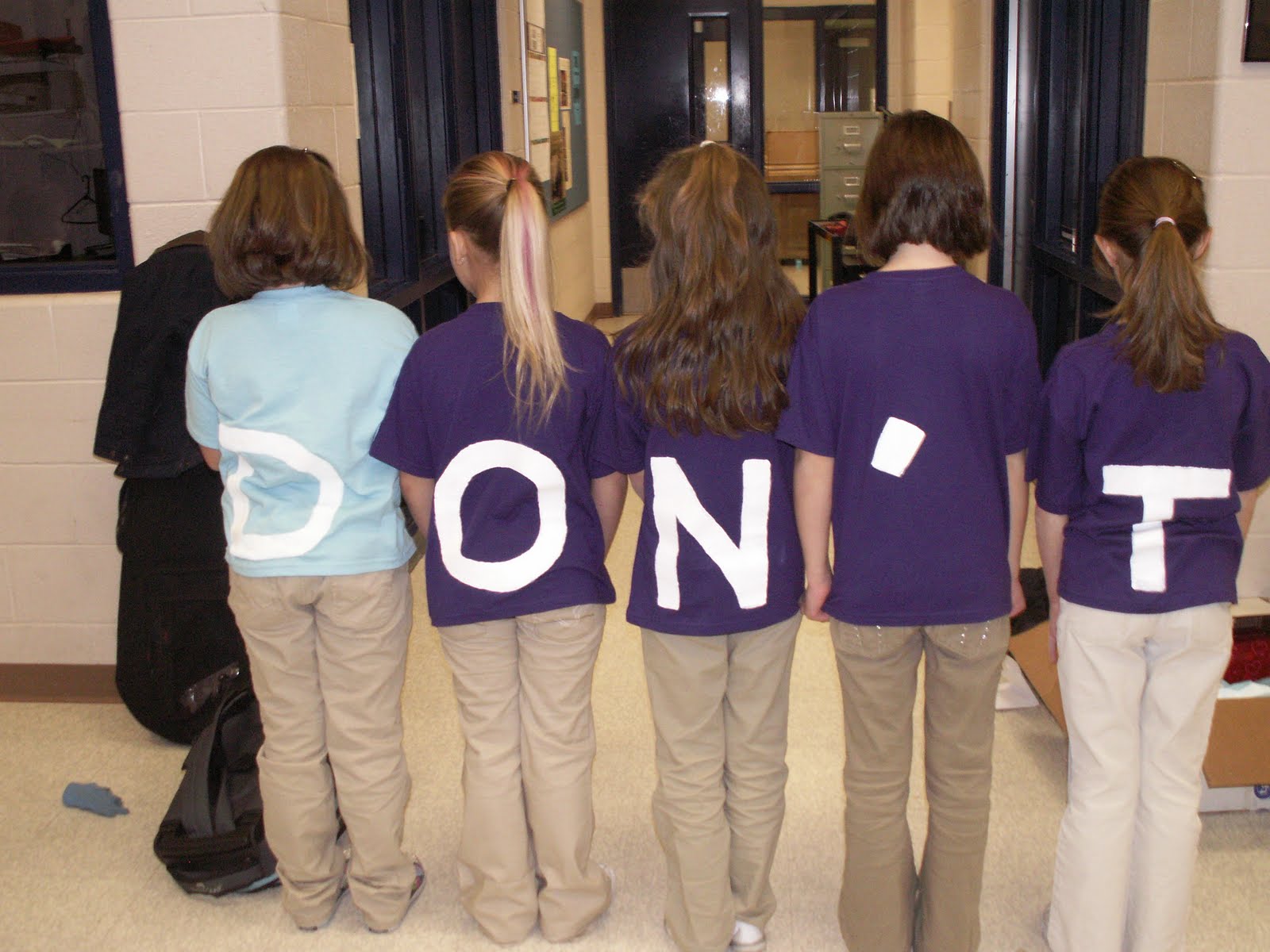
Bullying prevention takes a community.
Change begins when schools, organizations, parents and students unite. The letter below beautifully illustrates the efforts of a Brownie Troop from Michigan. Congratulations to the Troop, their families and their community. They are making a difference, touching many lives along the way, and it matters.
The End of Bullying Begins With Us! Hello PACER! It’s Carrie from Brownie Troop 30117. Just got your second “Thank You” letter and request to put our donation letter and a picture of our troop on your web site. We would be honored to be on your web site listed as Troop 30117 from Richmond, Michigan and I will send a picture as soon as I can and as soon as I get the o.k. from the Brownie moms. I am so thankful to you for recognizing our troop. Part of what we are trying to teach our girls this year is that every little bit counts and that change happens one person at a time. We all agreed that if our efforts this year helped ONE kid feel better or NOT get bullied that it would be worth it. With that being said, we truly picked the right organization to support... one that is thankful enough to reach out to us even though our contributions have only totaled $248.00 so far this year.
If you wouldn’t mind, I would also love to tell you about some of the other things we have done this year to create awareness and help the fight against bullying!
1. We earned our No Bullying patch. Each girl wears this on her sash or vest around school on meeting days.
2. We talked a lot about what it means to bully and what to do if it is happening to you or one of your friends…your web site helped a ton with this…great job on the kid specific stuff!
3. We also used a lot of the American Girl books and magazines…they have lots of good info too. They have a cool No Bullying pledge that we all signed.
4. We made pocket necklaces for ourselves or to give to someone who really needed it. Inside the pocket for around your neck the Brownies added a heart for kindness, a diamond to let your true self shine, a rock for confidence, a snowflake because you are unique and there is no one else on earth just like you and that is cool and googly eyes to help you see the good in all people.
5. We entered the Richmond Elementary School Talent Show and our act was designed to send a message to the audience about bullying. We danced to the theme song from the Movie Bugsy Malone…”You give a little love and it all comes back to you…you’re gonna be remembered for the things that you say and do….” Other cool lyrics included…”we’re weaker divided, good friends do tend to make you smile,” “shake an open hand, maybe trusting if you try to understand,” etc. During the dance the girls tossed beach balls out to the crowd to pass around that had your web site on them, a message about bullying and a cool lyric from the song. At the end of the song all the girls were lined up with their backs to the audience and the letters on their backs spelled out…don’t bully be kind! We were also able to get a message about bullying out to the audience through the announcer (principle) and the Talent Show program.
6. The girls wore t-shirts in the talent show that said…”You’re Gonna Be Remembered for the things you say and Do” on the front. They are now able to wear them to school and tell people what it is all about.
Thanks for letting me share! Pictures are soon to follow… from the Talent Show too!
PS: I learned about your web site from watching ELLEN. I have sent her all of the above information as well as a few gifts from the Troop as well!!!
Tuesday, February 8, 2011
RESPECT, By Will S. Bunin
Special thanks to Will S. Bunin for allowing PACER to post this poem. When asked about his inspiration, Will shared the following:
This poem is stating that even if your bullied you can stand up to the bully, and never be bullied again. What inspired me to write this poem? I could say that it was the kind gesture of watching someone help another being bullied. I could say that it was me who saved another. I could even say that it was me who was saved by another, but all these things that I could say would be lies. They would be simple hopes that are not true. When I was younger, I was bullied. I was bullied for being weird, incompetent, and just plain different. I acted how I wanted to, and paid the price for it. This continued until I finally had enough of it, and stood up for myself. I wish I was able to say that someone stood up to the bully and helped me out, but this is not the case.
RESPECT
Will S. Bunin
You don’t know me
So don’t judge what you can't see
Don’t smudge me out
Don’t begrudge my Intel
Just don’t hold a grudge
Against my style
Of all black
Or hate the idea
of a keychain
on the front of my back
Don't belittle what's different
About this kid
Don’t whittle my soul
Down to its core
Because that’s what bullies are for
That’s what you 're doing to my life
So don’t just stab me in the back
With a rugged old knife
This is not some surgery
So stop being the jury
And stop your misery
Stop your condescending low heartedness
You gruesome crow
You might make fun of me
Or ask me to calm down,
But no!
I'm not going to calm down for one second
I'm going to simply stand
Tall and fight
I'm going to stand tall and fight you
And your mean ugly hand
Your cold moribund fingers that tremble
Your dastardly deeds that correspond to evil
You and your outright impurity,
your cold, sickly, disorienting, repulsiveness
That fills all with hatred hotter than bloods thick core
I'm going to fight you because I can
Because someone as ghostly as you
Someone who causes as much hate as you
Someone who is as unjust and relentlessly cold as you
Needs to be stopped
Who am I you ask
I am simply him
I am the one you bully
I am the one you torment
I am the one who needs help,
But does not get it
I am the one who looks toward a new horizon
A new place of freedom
I am me
It's just that simple
am the one who has had enough of your bad behavior
I am the one who is standing up to people like you
I am the one who WILL win against your soaring ways,
Your bitter travesties.
I am the one who shows respect to those who show me the same courtesy
You want respect, don’t you?
All people do
If you want respect so much, then show me the same behavior
If you want respect so much, then show him the same behavior
If you want respect so much, then show everyone that you deserve it
Don’t judge someone because they're weird
Don’t judge someone cause they're annoying
Don’t judge some because they're different
Just don’t judge
RESPECT.
This poem is stating that even if your bullied you can stand up to the bully, and never be bullied again. What inspired me to write this poem? I could say that it was the kind gesture of watching someone help another being bullied. I could say that it was me who saved another. I could even say that it was me who was saved by another, but all these things that I could say would be lies. They would be simple hopes that are not true. When I was younger, I was bullied. I was bullied for being weird, incompetent, and just plain different. I acted how I wanted to, and paid the price for it. This continued until I finally had enough of it, and stood up for myself. I wish I was able to say that someone stood up to the bully and helped me out, but this is not the case.
RESPECT
Will S. Bunin
You don’t know me
So don’t judge what you can't see
Don’t smudge me out
Don’t begrudge my Intel
Just don’t hold a grudge
Against my style
Of all black
Or hate the idea
of a keychain
on the front of my back
Don't belittle what's different
About this kid
Don’t whittle my soul
Down to its core
Because that’s what bullies are for
That’s what you 're doing to my life
So don’t just stab me in the back
With a rugged old knife
This is not some surgery
So stop being the jury
And stop your misery
Stop your condescending low heartedness
You gruesome crow
You might make fun of me
Or ask me to calm down,
But no!
I'm not going to calm down for one second
I'm going to simply stand
Tall and fight
I'm going to stand tall and fight you
And your mean ugly hand
Your cold moribund fingers that tremble
Your dastardly deeds that correspond to evil
You and your outright impurity,
your cold, sickly, disorienting, repulsiveness
That fills all with hatred hotter than bloods thick core
I'm going to fight you because I can
Because someone as ghostly as you
Someone who causes as much hate as you
Someone who is as unjust and relentlessly cold as you
Needs to be stopped
Who am I you ask
I am simply him
I am the one you bully
I am the one you torment
I am the one who needs help,
But does not get it
I am the one who looks toward a new horizon
A new place of freedom
I am me
It's just that simple
am the one who has had enough of your bad behavior
I am the one who is standing up to people like you
I am the one who WILL win against your soaring ways,
Your bitter travesties.
I am the one who shows respect to those who show me the same courtesy
You want respect, don’t you?
All people do
If you want respect so much, then show me the same behavior
If you want respect so much, then show him the same behavior
If you want respect so much, then show everyone that you deserve it
Don’t judge someone because they're weird
Don’t judge someone cause they're annoying
Don’t judge some because they're different
Just don’t judge
RESPECT.
Thursday, February 3, 2011
Peer Advocacy - Innovative Bullying Prevention Initiative

The following is an article posted in local Minneapolis newspapers.
Ten Watertown-Mayer Middle School students recently traveled to the Minneapolis Convention Center to share their innovative bullying prevention initiative with school board members and administrators at the Minnesota School Board Association Conference. The students presented to a standing-room-only crowd.
The initiative, called “PACER’s Peer Advocacy Program,” is a collaborative effort of PACER Center and Watertown Mayer Middle School. Julie Hertzog, a Watertown parent of a student with a disability and the director of PACER’s National Bullying Prevention Center in Minneapolis, Minn., was concerned that her son might be vulnerable to bullying behavior. Because of that concern, she approached Connie Irvine, his middle school special education teacher, to discuss the issue.
Hertzog, along with Irvine, and Cris Leinendecker, Watertown-Mayer school psychologist, set out to design a creative solution. What resulted is being hailed as an innovative game changer for school districts looking to improve the climate of their schools, especially with regard to bullying. “The Peer Advocate Initiative is the first of its kind, and Watertown-Mayer Middle School has done a fantastic job of developing and piloting it.”, Hertzog said.
The premise of PACER’s Peer Advocate initiative is that the peers of children with disabilities become friends and advocates of these children. Students without disabilities are paired with students with disabilities, and receive training about the specific disabilities of their fellow students and how to advocate for them. These advocates spend time with Irvine and Leinedecker on a regular basis to discuss issues specific to their peer with disabilities and how to handle the issues. They also are anonymous reporters of bully behavior. The peer advocates plan fun activities specifically designed for their peer student, fostering friendships and relationships which normally would not be easily developed between typical children and those with disabilities.
“The overwhelming consensus is that everyone wins,” Irvine said. “What began as a way to ensure the safety of a vulnerable child in a school setting has grown into a program that builds character and compassion.” The program also gives students the skills to stand for themselves and others in the difficult situations, Leinendecker said.
The peer advocates report that this experience has changed the way they view those different than themselves, and has helped them to recognize everyone’s worth. “Some peer advocates have even admitted that they used to participate in bullying behavior, but because of this experience, they’ve stopped,” Irvine said.
The program has been well received by the student body, and Irvine has been approached by other students wanting to get involved and become peer advocates. “Much of the success of this program is due to the commitment of Ms. Irvine,” Hertzog said. “She is the organizer, teacher, day–to-day problem solver and heart of the program. Without her selfless effort, the vitality of the program would not be nearly as strong. “
Ten Watertown-Mayer Middle School students recently traveled to the Minneapolis Convention Center to share their innovative bullying prevention initiative with school board members and administrators at the Minnesota School Board Association Conference. The students presented to a standing-room-only crowd.
The initiative, called “PACER’s Peer Advocacy Program,” is a collaborative effort of PACER Center and Watertown Mayer Middle School. Julie Hertzog, a Watertown parent of a student with a disability and the director of PACER’s National Bullying Prevention Center in Minneapolis, Minn., was concerned that her son might be vulnerable to bullying behavior. Because of that concern, she approached Connie Irvine, his middle school special education teacher, to discuss the issue.
Hertzog, along with Irvine, and Cris Leinendecker, Watertown-Mayer school psychologist, set out to design a creative solution. What resulted is being hailed as an innovative game changer for school districts looking to improve the climate of their schools, especially with regard to bullying. “The Peer Advocate Initiative is the first of its kind, and Watertown-Mayer Middle School has done a fantastic job of developing and piloting it.”, Hertzog said.
The premise of PACER’s Peer Advocate initiative is that the peers of children with disabilities become friends and advocates of these children. Students without disabilities are paired with students with disabilities, and receive training about the specific disabilities of their fellow students and how to advocate for them. These advocates spend time with Irvine and Leinedecker on a regular basis to discuss issues specific to their peer with disabilities and how to handle the issues. They also are anonymous reporters of bully behavior. The peer advocates plan fun activities specifically designed for their peer student, fostering friendships and relationships which normally would not be easily developed between typical children and those with disabilities.
“The overwhelming consensus is that everyone wins,” Irvine said. “What began as a way to ensure the safety of a vulnerable child in a school setting has grown into a program that builds character and compassion.” The program also gives students the skills to stand for themselves and others in the difficult situations, Leinendecker said.
The peer advocates report that this experience has changed the way they view those different than themselves, and has helped them to recognize everyone’s worth. “Some peer advocates have even admitted that they used to participate in bullying behavior, but because of this experience, they’ve stopped,” Irvine said.
The program has been well received by the student body, and Irvine has been approached by other students wanting to get involved and become peer advocates. “Much of the success of this program is due to the commitment of Ms. Irvine,” Hertzog said. “She is the organizer, teacher, day–to-day problem solver and heart of the program. Without her selfless effort, the vitality of the program would not be nearly as strong. “
Tuesday, January 11, 2011
The Popular Girls
Things Are Not Always What They Seem
I am often asked the question "who gets targeted by bullying?" The age-old stereotype of bullying only happening to "the shy kid who wears glasses" has been shattered as we know that it can happen to anyone. And sometimes it happens to those that you least expect. The following story was sent by a young girl - and poignantly details that "being popular" doesn't give you the exemption ticket.
Some people may be jealous of the 'popular' girls. The IT people. I am one of the 5 most popular girls in the school and I'm telling you there is nothing to be jealous about. We're not true friends. The girls gossip and talk behind other's backs and there are sides to every little story. One day this girl hates you, the other day she thinks you're her best friend. That happens, and when it does, it hurts.
The most popular girl - the Queen Bee, some call it - leads people to believe in what she believes herself. She is popular because she built a reputation, but I know that nobody truly likes her. I am a very close friend to the Queen Bee's best friend (who doesn't think of the Queen Bee as her best friend, just lets her think so as to not hurt her and suffer the pain she and I suffer everyday) and I think she's jealous sometimes of our relationship. She would ask the other girls to go on a 'hate fest' against me and would ignore me for 3 days or so.
I've gotten used to it. Every week or two something like that happens. Sometimes I wonder why that never happens to her. Why when our group splits up temporarily she's never alone. The 'best friend' and I, we talk to each other. About how we feel about situations. But no, we never gossip. I know how it feels, I know how it feels to have your stomach empty and not dare to go to the cafeteria. I know how it feels to have to fight back tears. I would not wish it on anyone.
Nobody deserves it.
- A girl who is just trying to get through middle school
I am often asked the question "who gets targeted by bullying?" The age-old stereotype of bullying only happening to "the shy kid who wears glasses" has been shattered as we know that it can happen to anyone. And sometimes it happens to those that you least expect. The following story was sent by a young girl - and poignantly details that "being popular" doesn't give you the exemption ticket.
Some people may be jealous of the 'popular' girls. The IT people. I am one of the 5 most popular girls in the school and I'm telling you there is nothing to be jealous about. We're not true friends. The girls gossip and talk behind other's backs and there are sides to every little story. One day this girl hates you, the other day she thinks you're her best friend. That happens, and when it does, it hurts.
The most popular girl - the Queen Bee, some call it - leads people to believe in what she believes herself. She is popular because she built a reputation, but I know that nobody truly likes her. I am a very close friend to the Queen Bee's best friend (who doesn't think of the Queen Bee as her best friend, just lets her think so as to not hurt her and suffer the pain she and I suffer everyday) and I think she's jealous sometimes of our relationship. She would ask the other girls to go on a 'hate fest' against me and would ignore me for 3 days or so.
I've gotten used to it. Every week or two something like that happens. Sometimes I wonder why that never happens to her. Why when our group splits up temporarily she's never alone. The 'best friend' and I, we talk to each other. About how we feel about situations. But no, we never gossip. I know how it feels, I know how it feels to have your stomach empty and not dare to go to the cafeteria. I know how it feels to have to fight back tears. I would not wish it on anyone.
Nobody deserves it.
- A girl who is just trying to get through middle school
Subscribe to:
Posts (Atom)


 Posts
Posts


